

By Taylor Thomas
Carbon credits, net zero goals, and climate accountability are everywhere, but behind the scenes, one question looms large: how do we actually measure carbon?
For years, accurate carbon monitoring has required complex equipment, manual data processing, and expert oversight. It's worked well for researchers. But it hasn't worked at scale—until now.
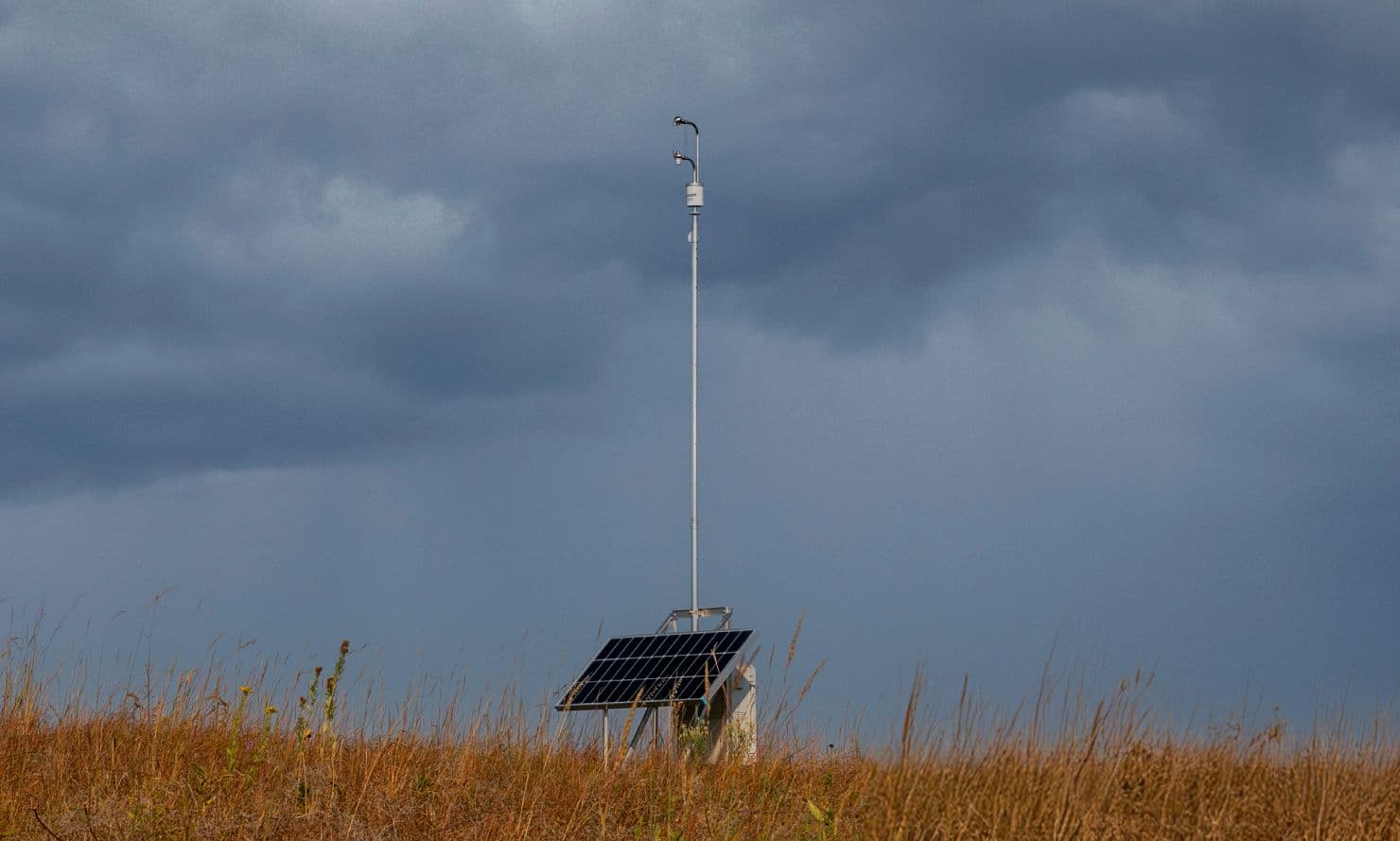
Welcome to the new era of carbon Monitoring, Reporting, and Verification (MRV), where you can install a field-ready carbon flux station in under an hour and start collecting real-time, high-quality data—with no technical background required.
This isn't science fiction. It's the Carbon Node System by LI-COR.
Why is Carbon Monitoring Important for MRV?
MRV is the backbone of trusted climate action. Whether you're verifying restoration credits, tracking carbon sequestration in soil, or evaluating wetland restoration, you need data that is defensible, traceable, and scalable.
The problem? Traditional methods of measuring carbon flux, like eddy covariance systems, while highly accurate, can be a bit tricky to deploy and maintain.
That's where the Carbon Node System comes in.
A Plug-and-Play System for Carbon Flux Measurement
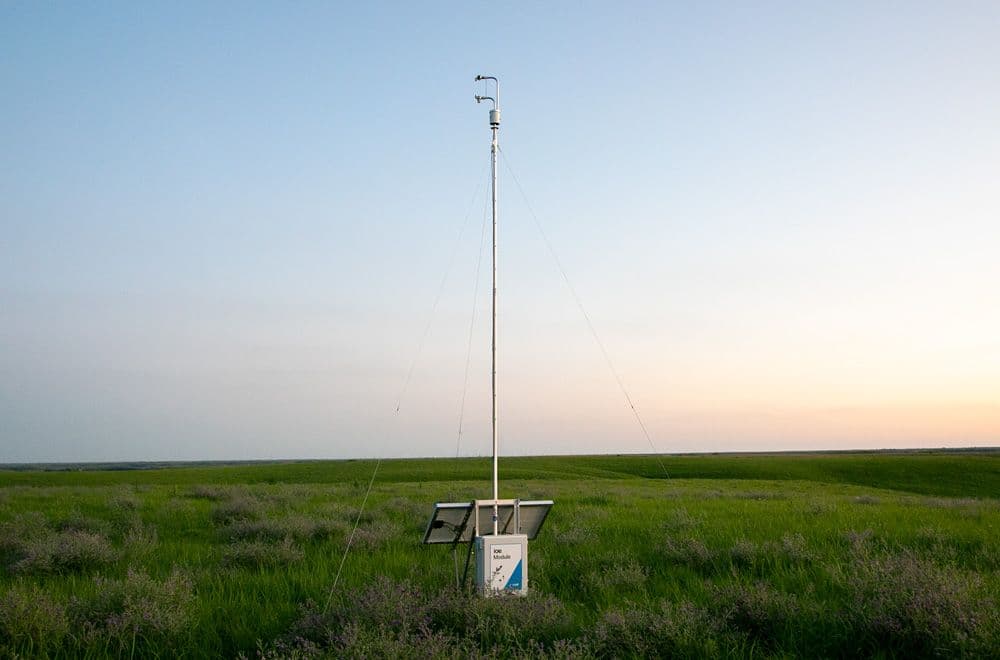
At the core of the system is the LI-720, a next-generation carbon flux sensor that combines a 3D sonic anemometer with a precise open-path CO2 and H2O analyzer. In plain terms, it directly measures how much carbon is entering or leaving an ecosystem—without guesswork or estimation.
Pairing the Carbon Node with a cellular hub, it becomes a fully autonomous carbon monitoring station that includes:
- Integrated GPS and tilt sensors for accurate geolocation
- Real-time data streaming to LI-COR Cloud
- Battery and solar power, ready for remote environments
- Simple plug-and-play setup
Just unpack, set up, and start collecting CO2 flux data!
How Does it Help Carbon Credit Projects?
If you're managing a carbon offset project, data quality can make or break your credit integrity. The Carbon Node System provides:
- High-resolution, time-stamped CO2 flux data
- Daily footprint analysis to prove that your measurement matches your land area
- Gap filling and QC using industry-standard, peer-reviewed methods
- A digital chain of custody from field sensor to final report
This means you can defend your credits, meet verification standards, and avoid going back-and-forth with auditors.
Is it Scalable for Larger MRV Programs?
Yes! The Carbon Node System is designed to scale effortlessly. With integrated sensing, power, telemetry, and cloud analytics, each node operates independently. Whether you're deploying at one site or one hundred, there's no added infrastructure, wiring, or need for on-site technicians.
Projects can now include direct deployment of carbon flux measurements across dozens or hundreds of sites with minimal effort. For researchers, that means more insight with less maintenance. For developers and verifiers, it means defensible, auditable data that meets the standards of voluntary and compliance carbon markets.
The result? Real carbon data, from real land, at real scale.
What Makes the Carbon Node System Different from Other MRV Tools?
Most MRV solutions rely on modeling, estimation, or inventory-based methods. They're useful but they're indirect. The Carbon Node System measures actual carbon movement in and out of ecosystems. That's critical for:
- Verifying additionality
- Demonstrating permanence
- Capturing the effects of real land-management changes
In short, it gives you a clear, continuous, and defensible view of your carbon impact.
A Modern MRV Solution, Ready for Today's Climate Needs
The Carbon Node System offers a simple but powerful upgrade to traditional carbon monitoring. It's faster to deploy, easier to use, and more reliable than legacy systems—without giving up the precision that climate accountability demands.
Whether you're a researcher, a project developer, or a climate investor, this is the tool that turns carbon flux into action.
Ready to Simplify Carbon Monitoring for Your MRV Project?
Check out our recent webinar, Carbon Monitoring for MRV: Leveraging the LI-COR Carbon Node, to learn more!