
If you study photosynthesis, carefully timed measurements can tell you a lot about how a leaf responds. But when those measurements are separated by minutes or hours, short-term changes can be easy to miss.
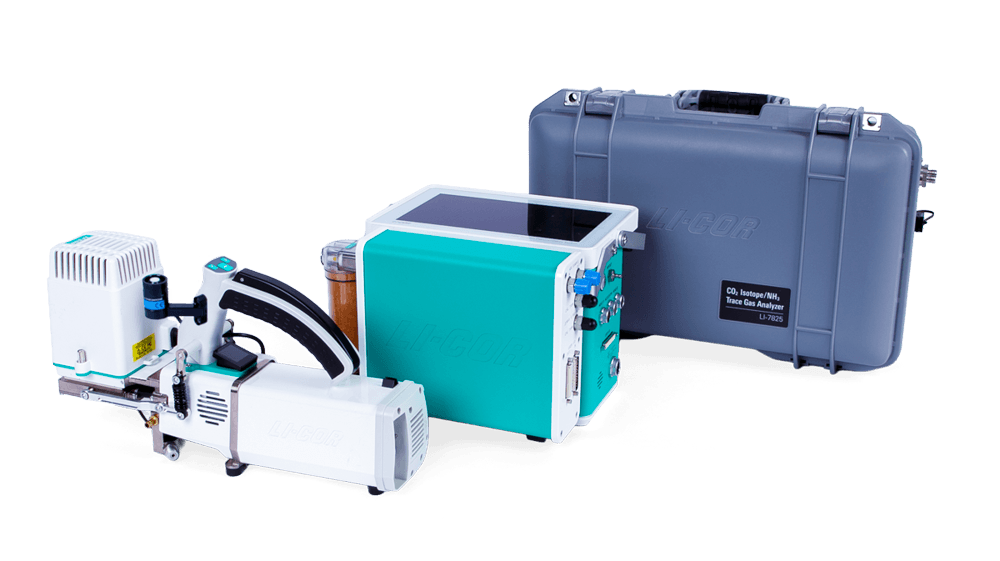
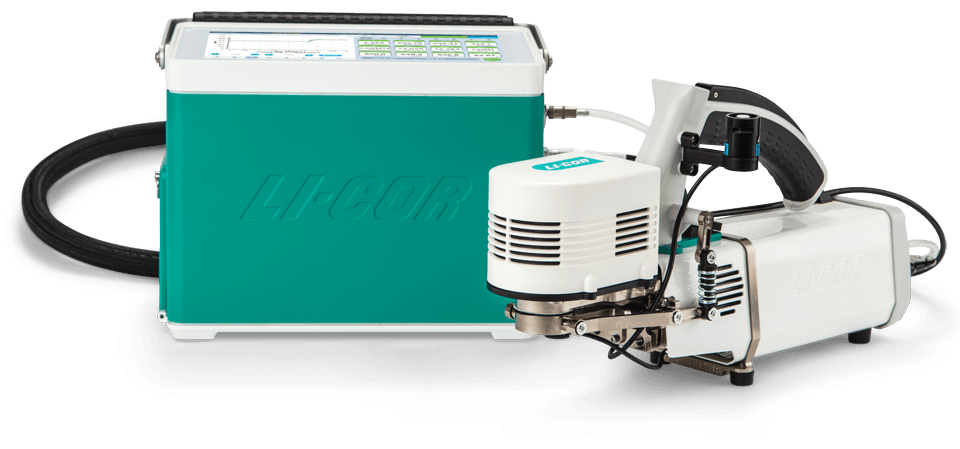
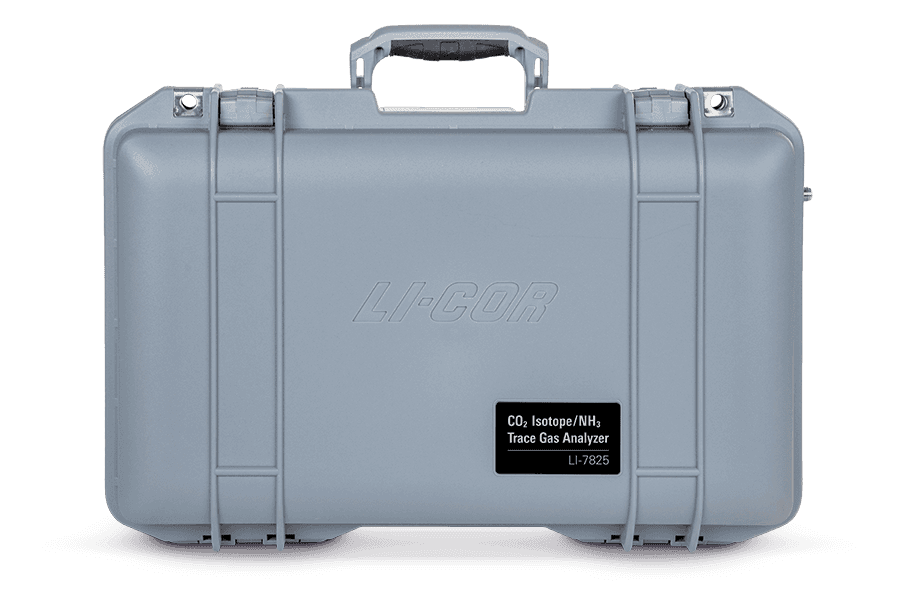
Researchers at Wageningen University & Research and LI-COR recently explored this challenge using an early version of the LI-6878 Leaf Trace Gas Integration System. By pairing an LI-6800 Portable Photosynthesis System with an LI-7825 CO2 Isotope/NH3 Trace Gas Analyzer, they estimated mesophyll conductance every five seconds during multi-day far-red-light experiments in tomato plants.
The resulting study demonstrates what becomes possible when leaf level gas exchange and carbon isotope discrimination measurements are collected simultaneously. See how the LI-6878 supports that workflow, what continuous measurements added to the experiment, and what else you can measure at the leaf level.
Key Takeaways
- The LI-6878 combines photosynthetic gas exchange with carbon isotope discrimination or trace gas measurements in one synchronized workflow.
- When paired with the LI-7825, the LI-6878 can estimate mesophyll conductance in C3 plants in real time using carbon isotope discrimination.
- New tomato research shows how frequent measurements can help researchers follow short-term changes in mesophyll conductance as they occur.
Why Measure Mesophyll Conductance?
Photosynthetic gas exchange shows current rates of carbon dioxide assimilation, how its stomata respond, and carbon dioxide concentrations in the intercellular air spaces. When photosynthesis changes, however, those measurements may not fully explain what happened as carbon dioxide traveled from those air spaces to the chloroplasts.
Adding carbon isotope discrimination gives you a way to estimate mesophyll conductance and examine whether internal carbon dioxide diffusion changed with photosynthesis.
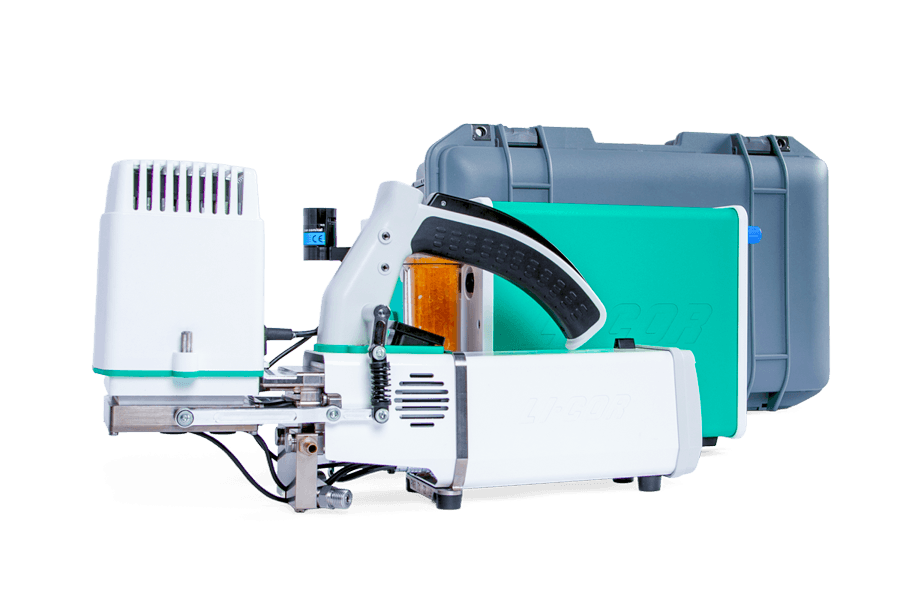
Prior to the LI-6878, these experiments required several instruments, custom plumbing, careful calibration, and separate data-processing steps—a complex process that often requires significant lab space and time from your team. The LI-6878 brings those measurements into one compact, integrated system that can be used in the lab, greenhouse, or field. Instead of building a custom setup around each experiment, you can now collect synchronized gas exchange and carbon isotope or trace gas data in the familiar LI-6800 workflow.
How the LI-6878 Works
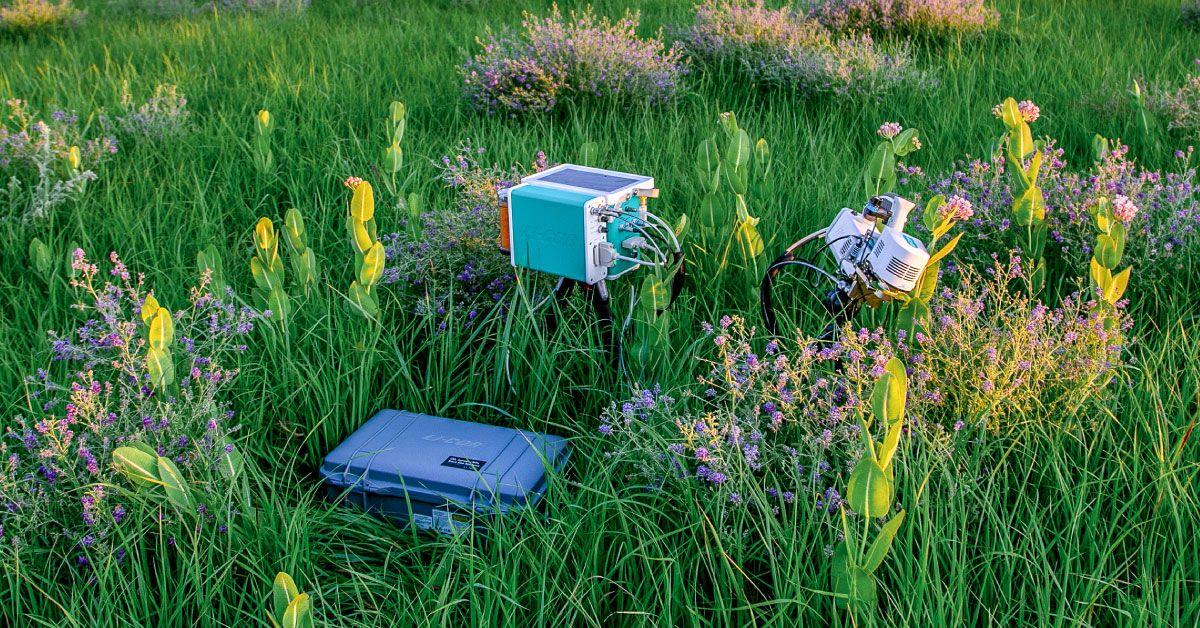
The LI-6878 connects the LI-6800 with one of three compatible LI-COR Trace Gas Analyzers. It minimizes water fluctuations through the Trace Gas Analyzer and provides all the necessary tubing and connections to pair with the LI-6800. You can pair it with the LI-7825 for carbon isotope discrimination and mesophyll conductance, the LI-7810 for methane flux, or the LI-7820 for nitrous oxide flux.
In this particular study, researchers focused on mesophyll conductance and used the LI-7825. With it, they were able to:
- Measure photosynthetic gas exchange. The LI-6800 controls conditions inside the leaf chamber and measures variables such as net carbon assimilation, stomatal conductance, and intercellular carbon dioxide.
- Measure carbon dioxide isotopes. The LI-7825 measures the carbon dioxide isotopologues used to calculate photosynthetic carbon isotope discrimination.
- View the measurements together. The LI-6800 communicates with the LI-7825, synchronizes the data, and supports real-time calculations of carbon isotope discrimination and mesophyll conductance in C3 plants.
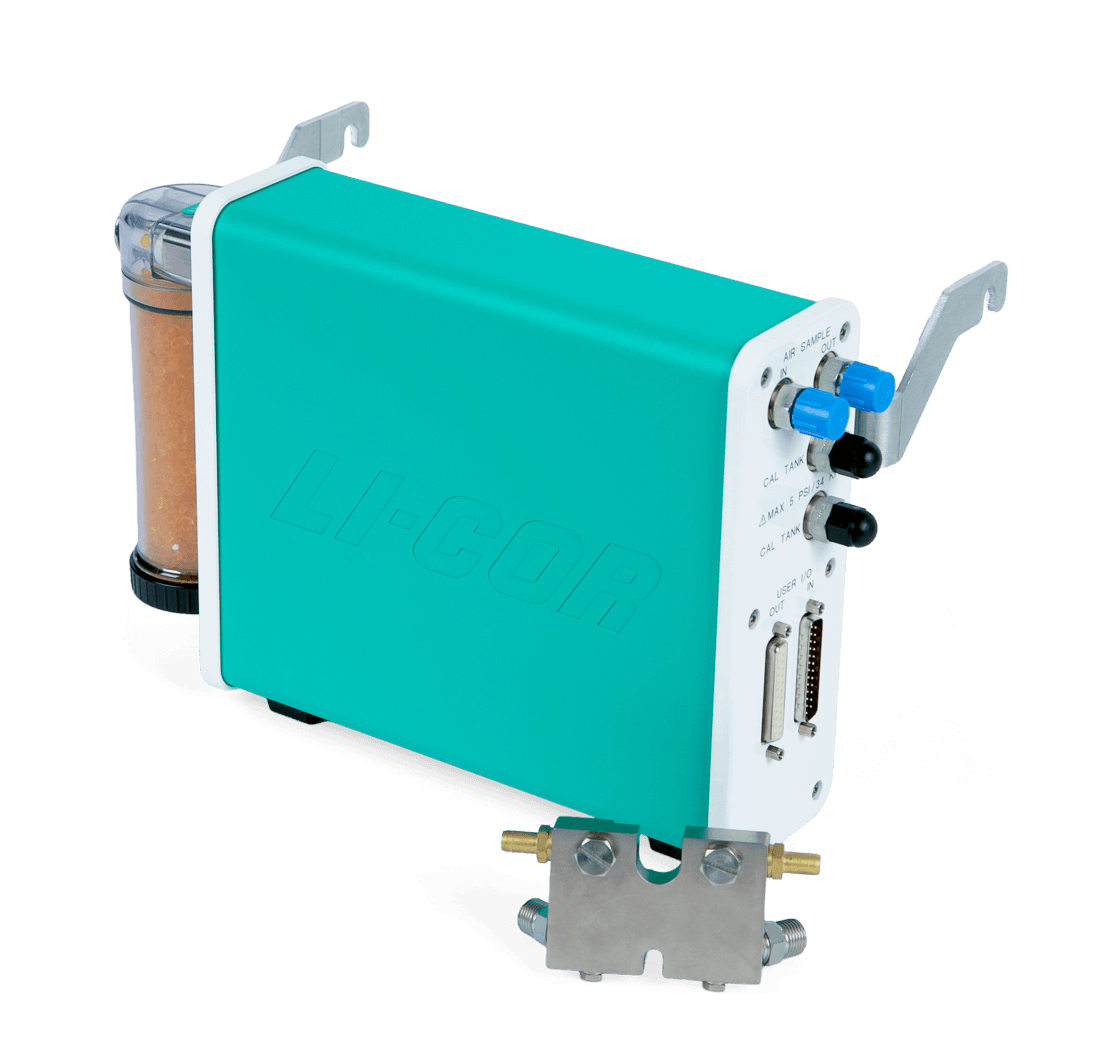
Looking for More Info on How the LI-6878 Works?
Find It HereMeasuring Far-Red Light Responses in Tomato Plants
Far-red light is a natural part of sunlight, but its proportion changes across plant canopies and growing environments. Previous research has shown that long-term exposure to far-red light can affect mesophyll conductance. This study sought to identify what happened over a much shorter period.
During the experiment, tomato leaves were exposed to different levels of far-red light while the LI-6878 system continuously collected gas-exchange and carbon isotope discrimination measurements. Rather than estimating mesophyll conductance only before and after treatment, the researchers could now follow it every five seconds alongside photosynthesis.
The measurements showed that mesophyll conductance can respond over a period of hours—and that the response depended on the amount of far-red light. The short-term response also differed from changes observed after weeks of exposure in earlier work.
Those findings raise new questions about how plants adjust over different timescales, whether the response occurs in other species, and how far-red light should be considered in greenhouse and controlled-environment lighting studies.
Research Article
Want to Know More?
Trace Gases You Can Measure with the LI-6878
This study used the LI-7825, but the LI-6878 is not limited to carbon isotope measurements. The analyzer you choose determines which additional leaf-level measurement is added to your gas-exchange workflow.
| Goal | Analyzer | Measurement Type |
|---|---|---|
| Examine how internal carbon dioxide diffusion responds to light, stress, genotype, or another treatment | LI-7825 CO2 Isotope/NH3 Trace Gas Analyzer | Carbon isotope discrimination and real-time mesophyll conductance in C3 plants |
| Study plant-mediated methane exchange across species or environmental conditions | LI-7810 CH4/CO2/H2O Trace Gas Analyzer | Leaf-level methane flux |
| Investigate how leaves exchange nitrous oxide under different nitrogen or environmental conditions | LI-7820 N2O/H2O Trace Gas Analyzer | Leaf-level nitrous oxide flux |
Each configuration supports a different type of research, but all three connect the additional measurement to what the leaf was doing at that time. This can help you relate isotope or trace gas data directly to photosynthetic gas exchange rather than treating it as a separate experiment.

Looking for the Measurement Workflow?
Watch This WebinarFind the Right Fit for Your Research
If your work focuses on standard photosynthetic gas-exchange variables, the LI-6800 may already provide what you need. The LI-6878 becomes useful when your research question also depends on carbon isotope discrimination, mesophyll conductance, or plant-mediated methane or nitrous oxide fluxes.
Need Help Deciding?
Contact UsNEVER MISS OUT ON ANOTHER POST
SUBSCRIBE TO OUR NEWSLETTERJOIN OUR COMMUNITY TODAY!